Why Jewellery Is Worth More Than Just Its Metal and Stone Weight
When people buy or sell jewellery, one of the first questions they often ask is: “How much does it weigh?”
Weight matters, of course. Gold, silver, platinum and gemstones all have measurable material values. However, jewellery has always been worth far more than the sum of its metal and stone weight.
A beautiful piece of jewellery can carry craftsmanship, history, rarity, emotion and individuality. These are the qualities that transform a collection of materials into something truly special.
Understanding the value of jewellery beyond metal weight can also prevent beautiful, historically significant or highly collectable pieces from being sold merely for scrap.
The Value of the Metal Is Only the Beginning
Precious metals such as gold, silver and platinum have an intrinsic value based on their purity and weight. When an item is assessed only for the recoverable metal it contains, this is commonly described as its scrap or melt value.
However, a finished piece of jewellery is not simply a lump of metal.
Consider a handcrafted 18-carat gold ring. Its value may include:
- The gold and its purity
- The time and skill required to make it
- The originality and quality of its design
- The cost and expertise involved in setting its gemstones
- The quality of its construction and finishing
- The reputation of its designer or maker
- Its age, rarity, condition and provenance
Melting the ring may recover the value of its gold, but it permanently destroys everything else that makes the piece beautiful, wearable and desirable.
Jewellery Craftsmanship Has a Value of Its Own
Jewellery making is a highly skilled art form that has been passed down through generations.
A skilled jeweller may spend hours, days or even weeks creating a single piece. Hand engraving, filigree work, stone setting, enamelling and detailed construction all require patience, experience and precision.
Two rings may contain exactly the same amount and purity of gold, yet one may be worth significantly more because of the craftsmanship involved in its creation.
This is particularly relevant to antique and vintage jewellery. Traditional manufacturing methods and hand-finishing can make each surviving piece distinctive. Some historic techniques require specialist knowledge and are difficult or expensive to reproduce today.
When buying a beautifully made piece of jewellery, you are not paying only for its materials. You are also paying for someone’s time, skill, creativity and artistry.
Design and Desirability Matter
Jewellery is also a form of design.
Just as a painting, sculpture, watch or designer handbag may command a premium because of its artistic and aesthetic appeal, jewellery can become more valuable because people find its design beautiful and desirable.
A well-designed piece attracts buyers who want to wear, collect and own it. That demand helps to influence its market value.
A finely designed ring containing a relatively small amount of gold may be worth more than a much heavier but ordinary gold item. Its value may come from the quality of its gemstones, the elegance of its proportions, the workmanship and the desirability of the finished design.
Beauty creates demand—and demand influences value.
Gemstones Are Not All Created Equal
The weight of a gemstone tells only part of its story.
Diamonds are commonly assessed using the four Cs:
- Cut
- Colour
- Clarity
- Carat weight
Two diamonds of identical carat weight can have dramatically different values depending on their quality.
The same principle applies to coloured gemstones such as sapphires, rubies, emeralds and alexandrite. Their value can be affected by factors including:
- Colour and saturation
- Clarity and inclusions
- Cut and proportions
- Natural or laboratory-grown origin
- Geographic origin, when reliably documented
- Treatments or enhancements
- Rarity
- Condition
- Independent laboratory reports
- Historical significance and provenance
A rare, untreated ruby with reliable evidence of a sought-after geographic origin cannot be valued accurately by simply multiplying its carat weight by a standard price.
Rarity matters.
Quality matters.
Documentation matters.
Sometimes, provenance matters even more.
Antique and Vintage Jewellery Carries History
One of the most fascinating qualities of jewellery is its ability to connect us with the past.
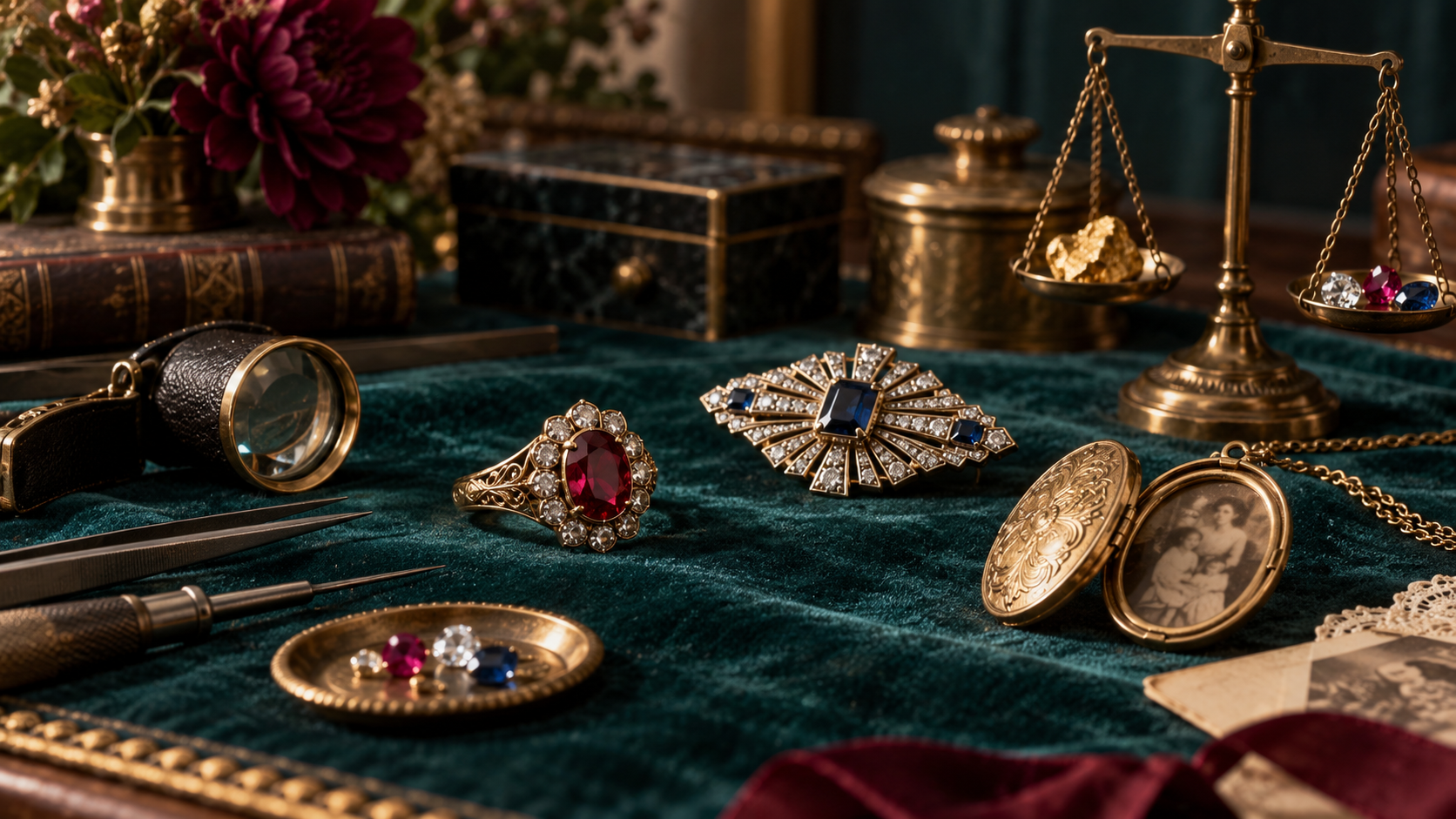
An Edwardian diamond brooch, an Art Deco platinum ring or a Victorian mourning bracelet may have survived for more than a century. These pieces have passed through generations and may have witnessed weddings, celebrations, family milestones and enormous social change.
Their value is not purely financial. It can also be historical and cultural.
Antique jewellery reflects the fashions, materials, technology, craftsmanship and social customs of the period in which it was created. Its construction may reveal how jewellers worked before modern machinery and mass production transformed the trade.
Some designs and techniques are no longer commonly produced, while others would be extremely expensive to recreate by hand today.
Owning antique jewellery can therefore mean owning a small and wearable piece of history.
Brand, Maker and Provenance Can Add Significant Value
The name behind a piece of jewellery can also influence its worth.
Jewellery made by renowned designers and houses such as Cartier, Van Cleef & Arpels, Tiffany & Co. or Bulgari may command prices far beyond the raw value of its materials.
This premium can reflect:
- Recognisable design
- Exceptional workmanship
- Brand reputation
- Rarity
- Collectability
- Documented provenance
- Confidence in authenticity
The same principle can apply to signed vintage costume jewellery. A piece does not need to contain precious metal or valuable gemstones to be collectable. Its designer, age, condition, rarity and desirability may still give it a market value far beyond the cost of its materials.
A signed piece with original packaging, receipts or reliable documentation may be considerably more desirable than an unidentified example.
However, a signature alone does not guarantee a high value. Authenticity, condition, rarity and current buyer demand must all be considered.
Condition Can Affect Jewellery Value
Condition is another factor that cannot be measured on a set of scales.
Collectors may pay more for a piece that retains its original finish, stones, fittings and components. Heavy repairs, missing stones, damaged enamel or replaced parts can affect desirability, although sympathetic professional restoration may sometimes help preserve an important piece.
With antique jewellery, some evidence of age is normal. The important question is whether the wear is consistent with the piece’s history or whether it affects its appearance, stability and usefulness.
Originality can also matter. An antique brooch that has been converted into a pendant may still be beautiful and wearable, but the alteration could affect its appeal to certain collectors.
Jewellery Holds Emotional Value
Perhaps the most important reason jewellery is worth more than its metal and stone weight is emotional value.
A wedding ring may have relatively little scrap value compared with the memories attached to it.
A necklace inherited from a grandmother may be priceless to its owner.
A vintage brooch purchased during a memorable holiday can become a treasured reminder of a particular place and time.
Jewellery is often connected to some of the most important moments in our lives:
- Engagements and weddings
- Birthdays and anniversaries
- Family heirlooms
- Milestones and achievements
- Religious and cultural traditions
- Gifts from loved ones
- Memories of people who are no longer with us
This emotional connection cannot be measured on a set of scales.
Sentimental value does not always increase the price that another buyer will pay, but it can make the piece irreplaceable to its owner. That distinction is important when deciding whether to sell, repair, redesign or insure meaningful jewellery.
Scrap Value, Market Value and Replacement Value
It is helpful to understand that jewellery can have several different types of value.
Scrap or Melt Value
Scrap value is based primarily on the recoverable precious metal contained in the item. Gemstones may be assessed separately, although small, damaged or commercially common stones might add little to a scrap offer.
Second-Hand Market Value
Market value considers what a willing buyer may pay for the complete item in the current second-hand market. This can include its design, craftsmanship, condition, maker, rarity, gemstones, provenance and desirability.
Retail Value
Retail value is the price at which a business offers the jewellery to a customer. It may also reflect authentication, testing, cleaning, repairs, photography, staffing, premises, insurance, guarantees and the seller’s expertise.
Insurance Replacement Value
An insurance valuation generally estimates the cost of replacing the item with a comparable piece through an appropriate retail market. It is not necessarily the amount the owner would receive if the jewellery were sold.
These figures can be very different from one another because they answer different questions.
Why Selling Jewellery for Scrap Can Be a Mistake
Selling a beautiful antique, vintage, signed or unusually well-made piece for scrap can sometimes mean losing a significant amount of its potential value.
Before selling jewellery solely by weight, it is worth checking:
- Its hallmarks and maker’s marks
- Whether it is signed
- Its approximate age
- The quality and condition of its gemstones
- Whether it has unusual construction or craftsmanship
- Whether similar pieces are sought after by collectors
- Whether any original packaging or documentation survives
- Whether it has a known history or provenance
An unwanted piece may have little emotional importance to its present owner while being highly desirable to a collector.
The market value of jewellery is based on what buyers are prepared to pay for the complete object—not simply what a refinery may recover from it.
Costume Jewellery Can Be Valuable Too
Jewellery does not need to be made from precious metal or natural gemstones to have value.
Vintage costume jewellery can be desirable because of its design, maker, age, condition, rarity or connection to a particular fashion period.
High-quality rhinestones, glass stones, enamel, specialist finishes and elaborate construction can all contribute to a piece’s appeal. Signed examples from collectable makers may command strong prices, but beautiful unsigned pieces can also attract buyers.
This is a perfect illustration of why jewellery value cannot always be determined by metal and stone weight. Sometimes, the raw materials are the least interesting part of the piece.
Jewellery Is Wearable Art
At its best, jewellery is wearable art.
It combines materials with human creativity to produce something that can be worn, admired, collected and passed down.
Unlike many other valuable objects, jewellery can become part of everyday life. It can mark an occasion, complete an outfit, express an identity and eventually become part of someone else’s story.
That is something a lump of raw metal or a loose stone cannot offer on its own.
Final Thoughts: The Value of Jewellery Beyond Metal Weight
The next time you look at a piece of jewellery, remember that its value is rarely determined solely by how much it weighs.
Behind it may be hours of craftsmanship, generations of history, rare materials, artistic design and priceless memories.
Whether it is a Victorian brooch, a diamond engagement ring, a piece of vintage costume jewellery or a modern designer creation, jewellery tells a story.
Sometimes, that story is worth far more than the metal and stones from which the piece was made.
Jewellery is not simply something we wear. It is craftsmanship, history, art and emotion—all captured in an object small enough to hold in your hand.